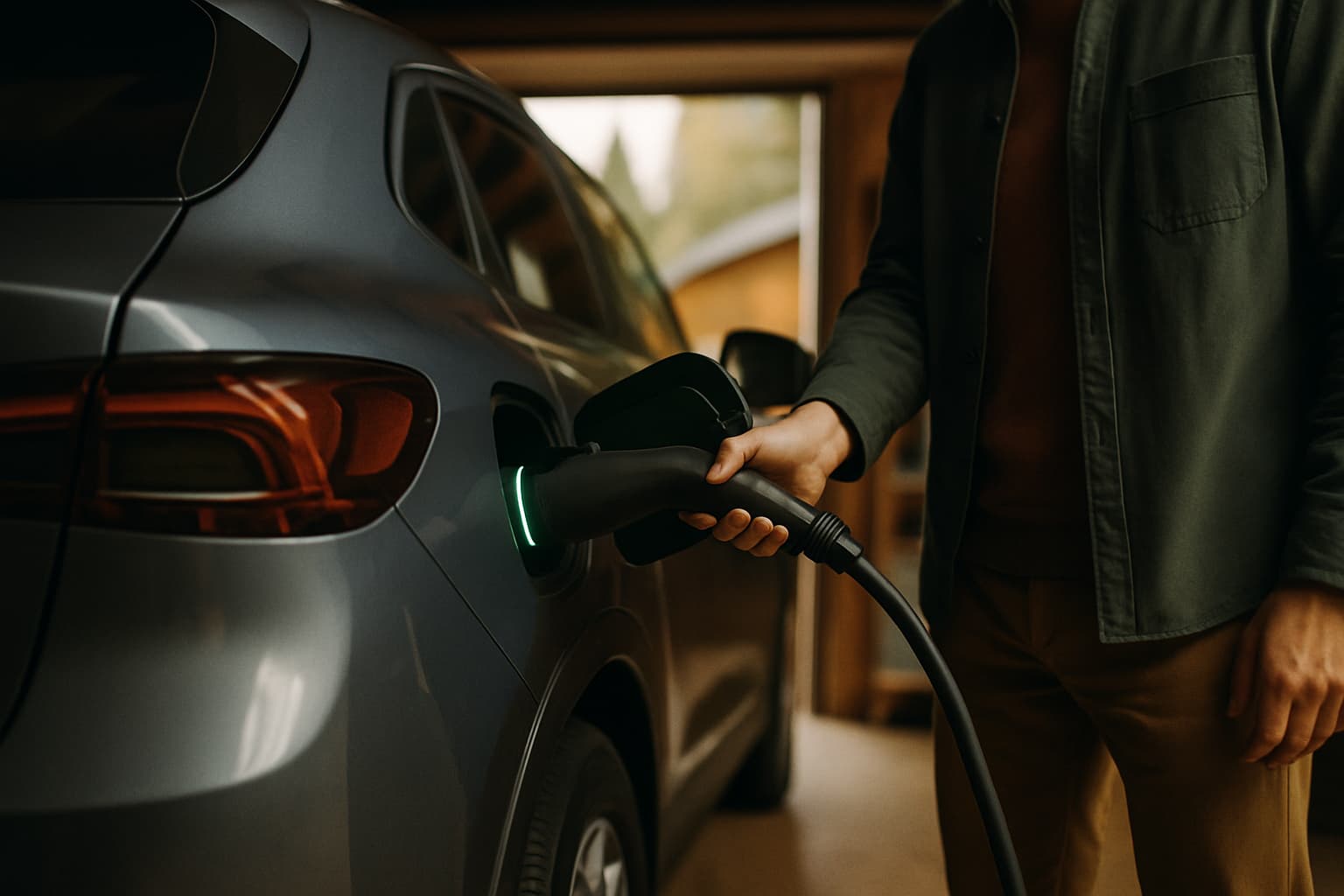
EV Charging 101: The Complete Beginner's Guide
Everything new EV owners need to know about charging. Level 1 vs Level 2, home charging, public networks, and how to never worry about range.
Just bought your first electric vehicle? Congratulations—you're never going back to gas. But charging can seem confusing at first. Level 1? Level 2? DC fast charging? CCS vs NACS?
Don't worry.
The Three Levels of EV Charging
Level 1: Standard Outlet (120V)
What it is: The charging cable that came with your car, plugged into a regular household outlet.
Speed: 3-5 miles of range per hour
Best for:
- Plug-in hybrids (small batteries)
- Light commuters (under 30 miles/day)
- Emergency backup
Reality check: Level 1 is painfully slow for most EVs. If you drive 40+ miles daily, you'll need Level 2.
Level 2: Home Charger (240V)
What it is: A dedicated charger on a 240V circuit (like your dryer uses).
Speed: 25-40 miles of range per hour
Best for:
- Daily charging at home
- Most EV owners
The sweet spot: A Level 2 charger at home means you wake up every morning with a "full tank." No gas stations, ever.
Pro Tip
You don't even need a fancy charger. A basic 240V outlet (NEMA 14-50) and your car's included adapter works fine. But a hardwired charger is cleaner and often faster.
Level 3: DC Fast Charging
What it is: High-powered public chargers (Electrify America, Tesla Supercharger, etc.)
Speed: 100-200+ miles in 20-30 minutes
Best for:
- Road trips
- When you need a quick top-up
Cost: More expensive than home charging—typically $0.30-0.45/kWh vs $0.12 at home.
Home Charging: The Game Changer
Here's the thing about EV ownership that gas car drivers don't understand: you start every day with a full charge.
You plug in when you get home, like charging your phone. Wake up to 250+ miles of range. No weekly gas station trips. No planning around fill-ups.
Home charging is:
- Cheaper: ~$0.12/kWh vs $0.30+ at public chargers
- More convenient: Charge while you sleep
- Always available: No waiting for a charger
For most people, home charging covers 95%+ of their charging needs. Public fast chargers are just for road trips.
What You Need for Home Charging
Option 1: Outlet + Portable Charger
- Install a NEMA 14-50 outlet (~$300-500 installed)
- Use your car's included charger or a portable Level 2
- Cheapest option, still gets 20-30 miles/hour
Option 2: Hardwired Wall Charger
- Dedicated unit mounted on wall (~$500-700 for unit)
- Professional installation (~$300-500)
- Fastest speeds, cleanest look
Understanding Charging Speed
Charging speed depends on three things:
Your Car's Onboard Charger
Every EV has a maximum AC charging rate. Common limits:
- Tesla Model 3/Y: 48 amps (11.5 kW)
- Hyundai Ioniq 5: 48 amps (11.5 kW)
- Chevy Bolt: 32 amps (7.7 kW)
A 50-amp charger won't charge a Bolt faster than 32 amps—the car is the bottleneck.
Your Charger's Output
Chargers range from 16 to 50+ amps:
- 16A = ~12 miles/hour
- 32A = ~25 miles/hour
- 48A = ~37 miles/hour
Your Electrical Circuit
Your home's wiring limits what's possible:
- 40A circuit 32A continuous charging
- 50A circuit 40A continuous charging
- 60A circuit 48A continuous charging
(Electrical code requires circuits be rated 125% of continuous load.)
Public Charging Networks
When you need to charge away from home, here are the major networks:
Tesla Supercharger
- Fastest and most reliable
- Now open to non-Tesla vehicles (with adapter)
- ~$0.35-0.45/kWh
Electrify America
- Wide coverage, especially near highways
- 150-350 kW chargers
- Sometimes reliability issues
ChargePoint
- Largest network (mostly Level 2)
- Great for destination charging
- Prices vary by location
EVgo
- Growing fast
- Common at shopping centers
- Good urban coverage
Apps to Download
Get the apps for all major networks before you need them. Also get PlugShare—it shows all chargers regardless of network and has user reviews.
Charging Etiquette
Yes, there's etiquette. Here are the unwritten rules:
-
Don't charge past 80% at fast chargers when others are waiting (charging slows dramatically above 80% anyway)
-
Move your car when done — don't leave it parked at a charger
-
Don't unplug someone else's car — ever
-
If a charger is broken, report it — helps the next person
-
Use Level 2 if you have time — save the fast chargers for people who need them
Road Trip Charging
Planning a road trip in an EV? Here's the strategy:
Before You Go
- Plan charging stops using A Better Route Planner (ABRP)
- Note backup chargers in case primary is broken/busy
- Download all the apps you might need
On the Road
- Arrive at chargers around 10-20% battery
- Charge to 60-80% (fastest charging happens here)
- Time your stops with meals/breaks
- Have a backup plan
The Reality
On a well-planned trip, charging adds maybe 20-30 minutes per 3 hours of driving. Not much more than gas stops + bathroom breaks. And you never have to stand outside in the cold pumping gas.
Charging Costs: The Math
Let's compare costs:
Gas car:
- 30 MPG, 12,000 miles/year
- 400 gallons at $3.50/gallon
- Annual fuel cost: $1,400
Electric car (home charging):
- 3.5 miles/kWh, 12,000 miles/year
- 3,400 kWh at $0.12/kWh
- Annual fuel cost: $408
That's $1,000/year in savings—and electricity rates are more stable than gas.
Common Charging Myths
"I'll run out of charge!" Modern EVs have 250-350+ miles of range. The average American drives 37 miles/day. You'll be fine.
"Charging takes too long!" At home, it takes 5 seconds—the time to plug in. You're not standing there watching it.
"There's nowhere to charge!" There are 50,000+ public chargers in the US. And you'll do 90%+ at home anyway.
"It'll kill my electric bill!" The average EV adds ~$30-50/month to your electric bill while eliminating $120-150 in gas costs.
Power Your EV with Solar
The ultimate setup: charge your EV with free solar power from your roof.
The average EV uses about 300 kWh/month. A modest solar system produces 500-800 kWh/month. Cover your house AND your car with clean, free energy.
Ready to Go Solar?
Get free quotes from top-rated local installers in Oregon & Washington.
Get My Free QuotesSummary: The Charging Basics
- Get Level 2 at home — it's the foundation of stress-free EV ownership
- Charge overnight — wake up full every day
- Use public fast chargers for road trips — they're easy once you get the hang of it
- Stop worrying about range — modern EVs have plenty
Welcome to EV life. You're going to love it.