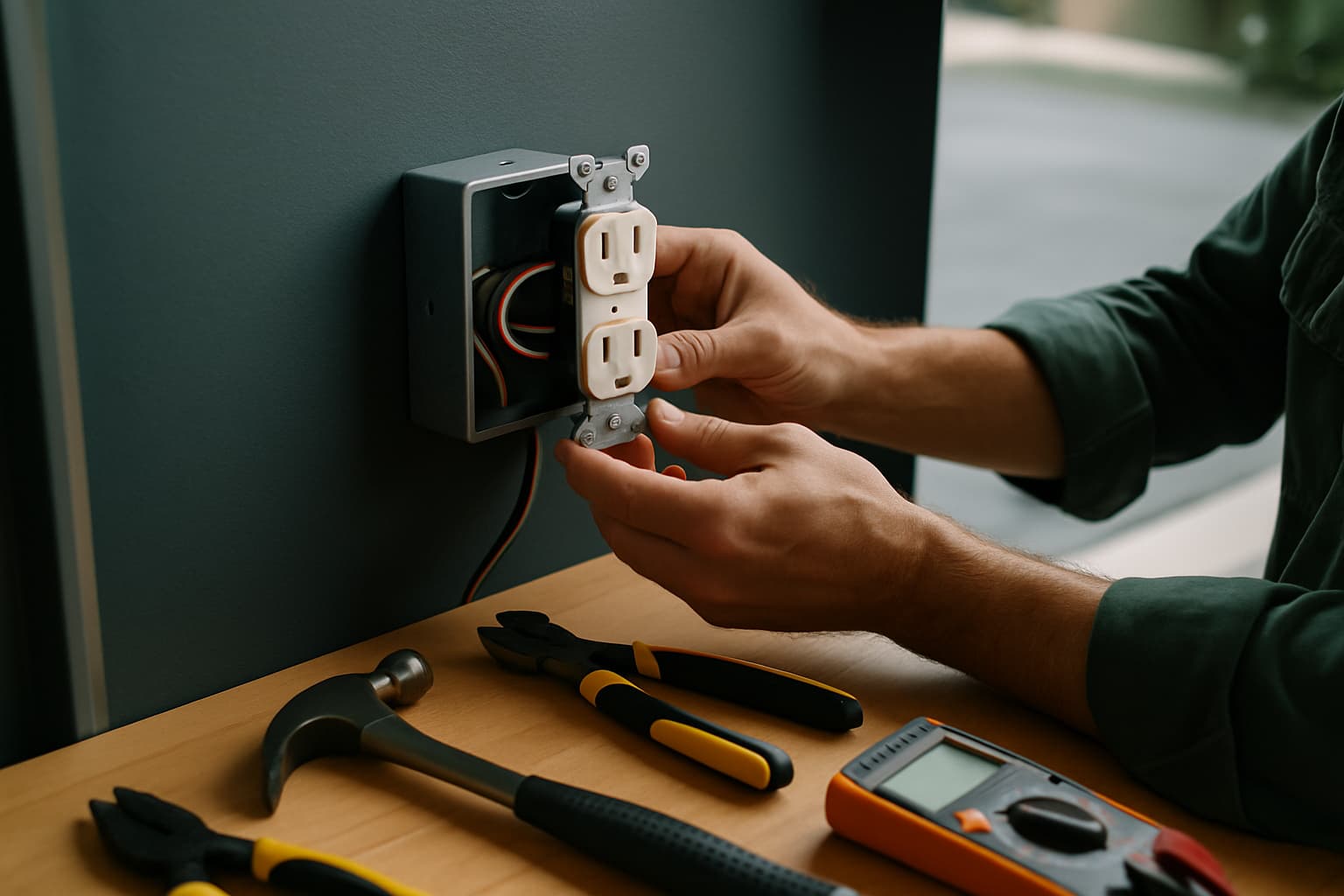
EV Charger Installation: What to Expect (Costs, Timeline, Tips)
Everything you need to know about installing a home EV charger. Costs, electrical requirements, permits, and how to find a good electrician.
EV Charger Installation: What to Expect
You've bought an EV (or you're about to). Now you need to charge it at home. Here's installing a Level 2 home charger.
Level 1 vs Level 2: Do You Even Need Installation?
Level 1 (120V): Plugs into any standard outlet. Adds ~4 miles of range per hour. Most EVs come with a Level 1 cable.
Level 2 (240V): Requires a dedicated circuit. Adds ~25-40 miles of range per hour. This is what we're talking about installing.
Do you need Level 2? If you drive less than 40 miles/day and can charge overnight, Level 1 might be enough. But most EV owners want Level 2 for the convenience and flexibility.
Installation Costs: What to Budget
The Charger Itself
- Budget: $350-450 (Grizzl-E, Lectron)
- Mid-range: $450-550 (Wallbox, Emporia)
- Premium: $550-700+ (ChargePoint, JuiceBox)
Installation Labor
This is where costs vary wildly based on your home's electrical situation:
| Scenario | Typical Cost | |----------|--------------| | Panel near garage, easy run | $200-400 | | Panel in basement, 30ft run | $400-700 | | Panel needs subpanel or upgrade | $800-2,000 | | Trenching for detached garage | $1,000-3,000+ |
Average total cost: $600-1,200 for charger + installation
What Drives Installation Costs Up?
- Distance from panel to charger — More wire = more money
- Panel capacity — If your panel is maxed out, you may need an upgrade or subpanel
- Permit requirements — Some areas require permits (~$50-150)
- Wall type — Running through concrete or brick costs more
- Conduit requirements — Some codes require metal conduit
Electrical Requirements
Circuit Size
Most Level 2 chargers need a 40-amp or 50-amp dedicated circuit. This means:
- 6-gauge wire (for 50A) or 8-gauge (for 40A)
- A dedicated 240V breaker in your panel
- No other devices sharing the circuit
Panel Capacity
Your electrical panel has a total capacity (usually 100A, 150A, or 200A for homes). You need enough spare capacity for the new circuit.
Quick check: Look at your panel. Add up the breaker amperages. If you're close to your panel's total, you may need:
- A subpanel for the garage
- A panel upgrade (expensive: $1,500-3,000)
- A smart charger with load management (limits charging when other loads are high)
NEMA 14-50 vs Hardwired
NEMA 14-50 outlet: The same outlet used for electric dryers and RVs. You can plug/unplug the charger. Easier to replace charger later.
Hardwired: Permanently wired into the electrical system. Slightly cleaner look. Required by some local codes.
Our recommendation: NEMA 14-50 outlet unless code requires hardwiring. The flexibility is worth it.
The Installation Process
Step 1: Get Quotes (1-2 weeks)
Contact 2-3 licensed electricians. They should:
- Visit your home to assess the panel and run
- Provide a written quote
- Confirm they'll pull permits if required
Red flag: Anyone who quotes without seeing your panel is guessing.
Step 2: Permit (if required)
Some jurisdictions require permits for EV charger installation. Your electrician should handle this. Typically adds $50-150 and 1-2 weeks.
Oregon: Most areas require permits for new 240V circuits. Portland, Salem, Eugene all require them.
Step 3: Installation Day
The actual installation usually takes 2-4 hours for a straightforward job. Longer if:
- Long wire runs
- Panel modifications needed
- Concrete/difficult surfaces
What to expect:
- Electrician turns off power at the panel
- Installs new breaker
- Runs wire from panel to charging location
- Installs outlet or hardwires charger
- Tests the circuit
- Restores power
Step 4: Inspection (if permitted)
If a permit was pulled, an inspector will verify the work. Usually scheduled within a week of installation.
Finding a Good Electrician
What to Look For
- Licensed and insured
- Experience with EV charger installations
- Willing to pull permits
- Clear, written quotes
- Good reviews (Google, Yelp, Nextdoor)
Questions to Ask
- "Have you installed EV chargers before?"
- "Will you pull the permit?"
- "Is my panel adequate, or will I need upgrades?"
- "NEMA outlet or hardwired — what do you recommend?"
- "What's included in the quote? What could add cost?"
Where to Find Electricians
- Ask your EV dealer — They often have referral lists
- Charger manufacturer sites — ChargePoint and others have installer networks
- Local EV owner groups — Facebook groups often have recommendations
- Nextdoor — Good for finding local contractors with reviews
Oregon-Specific Tips
Utility Rebates
Check with your utility for EV charger rebates:
- Portland General Electric: Up to $500 rebate
- Pacific Power: Varies by program
- Eugene Water & Electric Board: Check current programs
Time-of-Use Rates
Many Oregon utilities offer EV-specific rate plans with cheaper overnight electricity. Ask about:
- PGE's "EV charging" rate schedule
- Pacific Power's time-of-use options
A smart charger that can schedule charging helps you take advantage of these rates.
Permitting
Oregon requires permits for EV charger installation in most jurisdictions. Your electrician should handle this, but verify.
DIY Installation?
Can you do it yourself? Technically, yes, if you're comfortable with electrical work. But we don't recommend it because:
- Permits — Most areas require a licensed electrician for permitted work
- Safety — 240V circuits can kill. Mistakes aren't forgiven.
- Insurance — DIY electrical work may void homeowner's insurance coverage
- Warranty — Some charger warranties require professional installation
If you're handy and want to save money, you can run the conduit and wire yourself, then have an electrician make the panel and charger connections. Ask if they'll work with you on this.
Timeline Summary
| Step | Duration | |------|----------| | Research & choose charger | 1-2 days | | Get electrician quotes | 1-2 weeks | | Permit (if needed) | 1-2 weeks | | Installation | 2-4 hours | | Inspection (if needed) | 1 week |
Total: 2-5 weeks from decision to charging at home.
Our Recommendations
For most Oregon homeowners:
- Get 2-3 quotes from licensed electricians
- Choose a 40A circuit with NEMA 14-50 outlet
- Buy a Grizzl-E Classic ($399) or Smart ($499)
- Check utility rebates before you pay
Total budget: $600-1,000 for a straightforward installation
Want to charge your EV for free? Get solar quotes from local Oregon installers and power your car with sunshine.